

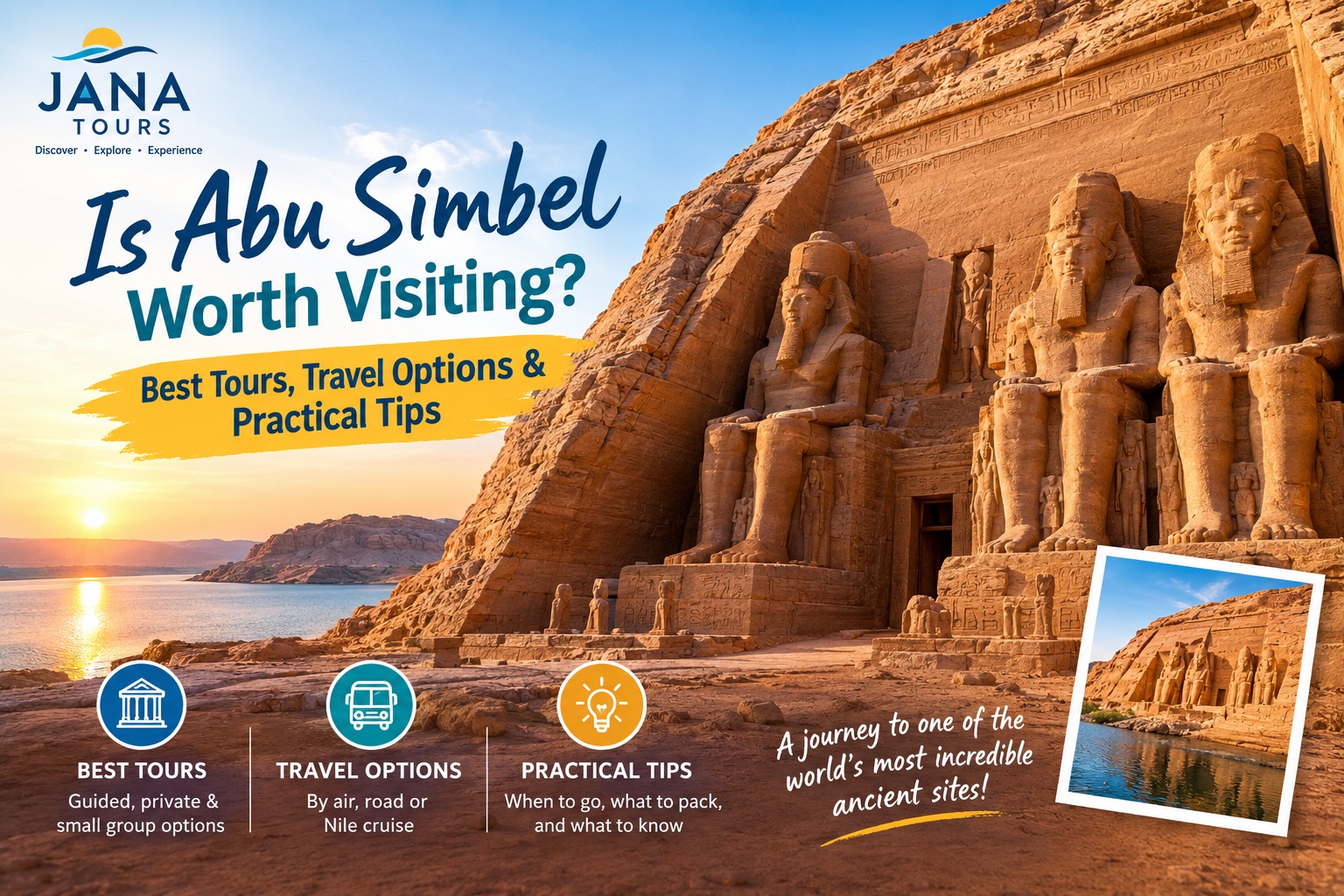
Is Abu Simbel Worth Visiting? Best Tours, Travel Options & Practical Tips
Is Abu Simbel Worth Visiting?
Absolutely! Abu Simbel is one of Egypt’s most extraordinary archaeological destinations, combining monumental architecture, fascinating ancient history, and a remarkable story of modern engineering. Located in southern Egypt near Lake Nasser, the site is famous for its enormous statues of Ramesses II and its two magnificent rock-cut temples.
Although reaching Abu Simbel requires more planning than visiting attractions in central Aswan, the journey rewards travelers with an unforgettable encounter with ancient Egyptian civilization. Whether you are exploring Egypt for the first time or returning to discover places beyond the famous pyramids, Abu Simbel deserves a place on your itinerary.
The temples are also part of the UNESCO World Heritage property known as the Nubian Monuments from Abu Simbel to Philae, recognized for their historical significance and the international effort that saved them from flooding.
1. What Makes Abu Simbel So Special?
The Great Temple of Ramesses II
The Great Temple is the landmark that makes Abu Simbel instantly recognizable. Four colossal seated statues of Ramesses II dominate the entrance, creating an impressive façade carved directly into the mountainside during the 13th century BC.
Inside, visitors pass through halls decorated with monumental statues and detailed reliefs before reaching the sanctuary. The temple was dedicated to Amun-Ra, Ra-Horakhty, Ptah, and the deified Ramesses II, reflecting the pharaoh’s religious and political ambitions.
Beyond its impressive scale, the temple offers insight into the power of royal imagery in ancient Egypt. Its sculptures and inscriptions celebrate the king’s reign and military achievements, making the complex an important destination for travelers interested in Egyptian history and archaeology.
The Temple of Queen Nefertari
A short distance from the Great Temple stands the smaller temple dedicated to Queen Nefertari and the goddess Hathor.
Its façade features statues of Ramesses II and Nefertari, with the queen represented on a scale comparable to her husband—a distinctive feature in ancient Egyptian royal sculpture. The temple’s interior contains beautifully decorated walls and religious scenes associated with Hathor and the royal couple.
Why visit both temples? The Great Temple reveals the grandeur of Ramesses II’s reign, while the Temple of Nefertari offers a different perspective on royal identity, devotion, and the role of queens in ancient Egypt.
The Sun Alignment Phenomenon
One of Abu Simbel’s most remarkable features is the sunlight phenomenon associated with the Great Temple’s sanctuary.
Traditionally observed on February 22 and October 22, sunlight travels through the temple’s interior and illuminates several of the sanctuary’s statues. The alignment is a striking example of the ancient builders’ understanding of architectural orientation and solar movement.
If witnessing this event is part of your travel plans, arrange transportation and accommodation well in advance. Special dates can attract more visitors, and access arrangements may differ from an ordinary day.
A Temple Complex Saved from the Rising Waters
Abu Simbel’s modern history is almost as extraordinary as its ancient origins.
When Egypt built the Aswan High Dam, the rising waters threatened to submerge important Nubian monuments. An international campaign coordinated by UNESCO helped save Abu Simbel and other archaeological sites.
Between 1964 and 1968, the temples were cut into sections, moved, and reconstructed at a higher location. The operation preserved the monuments while demonstrating what international cooperation could achieve in heritage conservation.
Knowing this story makes a visit even more meaningful: the temples are not only monuments to an ancient pharaoh, but also symbols of the worldwide effort to protect humanity’s cultural heritage.
2. Best Abu Simbel Tours: Which Option Should You Choose?
The best tour depends on your schedule, budget, preferred level of comfort, and the amount of time you want to spend exploring southern Egypt.
Abu Simbel Day Trip from Aswan
A day trip from Aswan is the most practical choice for many travelers. The temples are approximately 280–300 kilometers south of Aswan by road, so the excursion involves a substantial journey through desert landscapes.
Organized tours typically include transportation and may offer hotel pickup, a guide, or other services depending on the package.
Best for: Travelers staying in Aswan who want to visit Abu Simbel without changing hotels.
Private Abu Simbel Tour
A private excursion can offer greater flexibility, particularly for couples, families, photographers, and travelers who prefer a more personalized experience.
Depending on the itinerary, you may be able to coordinate pickup times, arrange a private guide, and combine the visit with other activities in Aswan.
Before booking, confirm exactly what is included: transportation, entrance tickets, guide services, meals, and any additional stops.
Best for: Travelers who value privacy, comfort, and a more tailored schedule.
Abu Simbel by Air
Flying from Aswan can significantly reduce travel time compared with the road journey. However, flights operate according to available schedules, and the overall excursion depends on departure times, airport transfers, and time at the temples.
Compare the total journey and package price rather than considering flight duration alone.
Best for: Travelers with limited time who prefer to minimize road travel.
Abu Simbel as Part of a Nile or Lake Nasser Cruise
Some longer Egypt itineraries include Abu Simbel alongside other archaeological attractions. Certain Lake Nasser cruises also visit temples in the wider Nubian region.
This option can suit travelers who want to experience southern Egypt at a more relaxed pace. However, cruise routes and included excursions vary, so check the itinerary carefully before booking.
Best for: Travelers seeking a multi-day cultural journey rather than a single excursion.
3. How to Get to Abu Simbel
From Aswan by Road
The road journey from Aswan usually takes around three to four hours each way, depending on the route and travel arrangements. Many organized excursions depart early in the morning to allow time at the temples and avoid the hottest part of the day.
Traveling with an established tour operator can simplify transportation and coordination, particularly if you have limited time in Aswan.
From Aswan by Plane
Domestic flights may provide a faster alternative, with flight time often around 45 minutes when direct services operate. Remember to account for airport transfers, check-in, waiting time, and the return journey when comparing options.
From Cairo or Luxor
If you are staying in Cairo or Luxor, Abu Simbel usually requires additional travel planning. You may need to connect through Aswan or arrange a multi-day itinerary that includes southern Egypt.
For most visitors, it is more convenient to plan Abu Simbel around an overnight stay in Aswan rather than attempt a long, complicated journey from another city in a single day.
4. Practical Tips for Visiting Abu Simbel
Best Time of Year to Visit
The cooler months, generally from October through April, are often more comfortable for exploring southern Egypt. Winter mornings can be cool, while midday temperatures may still rise.
If you are traveling during summer, prioritize early visits, sun protection, and sufficient drinking water.
What to Wear and Bring
Wear comfortable walking shoes and lightweight clothing suitable for the weather. Bring:
- Drinking water and sun protection.
- A hat and sunglasses.
- Comfortable footwear for walking around the complex.
- A camera or phone for photographs, subject to site rules.
- Some cash for incidental expenses, while confirming accepted payment methods in advance.
How Much Time Should You Allow?
Many visitors spend approximately one and a half to two hours exploring the temples, although the ideal duration depends on your interests and pace.
Remember to include travel time. A road excursion from Aswan can occupy most of the day, so avoid scheduling demanding activities immediately afterward.
Tickets and Opening Hours
Check the official Egyptian Ministry of Tourism and Antiquities information before traveling. Entrance prices, opening hours, ticket conditions, and special-event arrangements can change.
Clarify whether your tour includes admission tickets, since transportation and entrance fees are not necessarily bundled together in every package.
Photography and Visitor Etiquette
Follow the current photography regulations and instructions from site staff. Avoid touching carved surfaces, climbing on monuments, or crossing barriers. Respecting these rules helps preserve the temples for future generations.
5. Is Abu Simbel Worth the Long Journey?
For many travelers, the answer is yes—especially if ancient Egyptian history is a major reason for visiting Egypt.
Abu Simbel offers a different experience from the pyramids of Giza or the temples of central Luxor. Its monumental setting, remarkable interior spaces, solar alignment, and relocation story combine to create a destination that is both historically important and visually unforgettable.
However, it may not suit every itinerary. If you have only one or two days in Egypt, prioritize the attractions closest to your base. If you already plan to spend time in Aswan, adding Abu Simbel can be one of the most rewarding decisions of your trip.
Who Should Visit Abu Simbel?
- History enthusiasts: Discover one of the great royal monuments of ancient Egypt.
- Photography lovers: Capture monumental statues, intricate reliefs, and the surrounding desert landscape.
- Culture-focused travelers: Learn about Nubia and the international effort to preserve its heritage.
- Repeat visitors to Egypt: Explore a remarkable destination beyond the country’s most familiar landmarks.
6. Suggested Egypt Itinerary Including Abu Simbel
If you want to combine Abu Simbel with other highlights of southern Egypt, consider a flexible itinerary like this:
Day 1: Arrive in Aswan
Visit Philae Temple, explore the city, and enjoy the atmosphere along the Nile.
Day 2: Abu Simbel excursion
Travel south to visit the Great Temple of Ramesses II and the Temple of Nefertari. Return to Aswan if your transport schedule allows.
Day 3: Explore Aswan
Discover the Unfinished Obelisk, the Aswan High Dam, or a Nubian cultural experience, depending on your interests.
Days 4–5: Continue to Luxor
Travel by road, train, or Nile cruise, depending on your arrangements. Explore Karnak Temple, Luxor Temple, and the West Bank’s royal tombs and monuments.
This is only a sample plan. Your final itinerary should account for transport availability, opening times, cruise schedules, and how much time you prefer to spend at each site.
7. Book Your Abu Simbel Experience with Jana Tours
Make your journey through ancient Egypt easier to organize with a well-planned itinerary. Whether you are interested in a dedicated Abu Simbel excursion, a wider Aswan sightseeing experience, or a multi-day journey combining Aswan and Luxor, choosing the right transportation and schedule can make a significant difference.
Explore the available Egypt tours with Jana Tours and choose an itinerary that fits your travel dates, interests, and budget.
Ready to discover one of Egypt’s most remarkable monuments? Visit Jana Tours to explore travel options and plan your Egyptian adventure.
Frequently Asked Questions About Abu Simbel
Is Abu Simbel worth visiting from Aswan?
Yes. Abu Simbel is one of southern Egypt’s most significant archaeological attractions. Although the journey is long, the two temples and their fascinating history make the excursion worthwhile for many visitors.
How far is Abu Simbel from Aswan?
Abu Simbel is approximately 280–300 kilometers south of Aswan by road. The drive commonly takes around three to four hours each way.
Can you visit Abu Simbel in one day?
Yes. Many travelers visit on a day trip from Aswan, usually departing early and returning later the same day.
How long do you need at Abu Simbel?
Allow approximately one and a half to two hours for the temple complex, plus the time needed for transportation and any planned stops.
What is the best way to reach Abu Simbel?
A road tour is a common option, while flights may be suitable for travelers with limited time. The best choice depends on available schedules, cost, comfort, and your wider itinerary.
When does the sun illuminate the sanctuary at Abu Simbel?
The famous solar alignment is traditionally associated with February 22 and October 22. Travelers hoping to experience the event should verify arrangements and availability well in advance.
Can Abu Simbel be combined with a Nile cruise?
Yes, depending on the itinerary. Some travelers visit Abu Simbel before or after a Nile cruise, while certain Lake Nasser cruises include visits to Nubian monuments. Confirm the exact route and inclusions before booking.
Are entrance tickets included in Abu Simbel tours?
It depends on the package. Always check whether admission, transportation, guide services, and meals are included before confirming your reservation.
Abu Simbel is more than a spectacular archaeological site. It is a place where royal ambition, ancient craftsmanship, Nubian heritage, and modern conservation meet. For travelers who want to understand the depth of Egypt’s history, it offers a powerful reason to venture farther south.
Plan ahead, choose transportation that suits your schedule, and give yourself enough time to appreciate both temples. With the right arrangements, Abu Simbel can become one of the defining experiences of your journey through Egypt.
Ready to Discover Abu Simbel?
Stand before the colossal statues of Ramesses II and explore the magnificent temples that reveal the grandeur of ancient Egypt. Let Jana Tours help you plan an unforgettable journey to Abu Simbel, with convenient tour options and experiences tailored to your travel plans.
Book your Abu Simbel adventure with Jana Tours today! Visit Jana Tours and start planning your Egyptian adventure.
One thought on “Is Abu Simbel Worth Visiting? Best Tours, Travel Options & Practical Tips”