

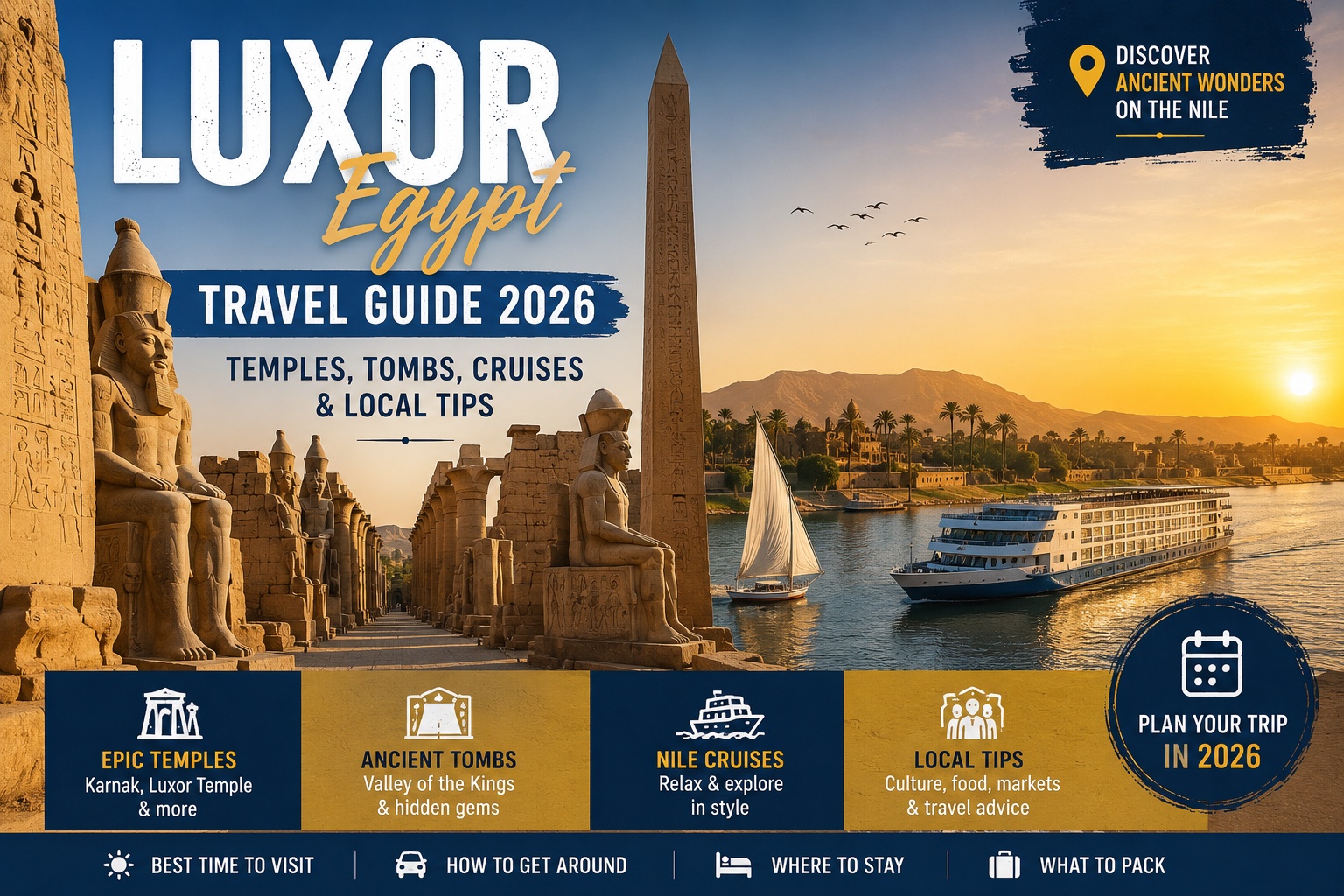
Luxor Egypt Travel Guide 2026: Temples, Tombs, Cruises & Local Tips
Luxor is more than just a destination—it’s a journey through thousands of years of history. Located on the east bank of the Nile River in southern Egypt, Luxor is often called the world’s greatest open-air museum because of its remarkable concentration of ancient monuments, temples, royal tombs, and archaeological treasures. Once known as Thebes, the capital of Ancient Egypt during the New Kingdom, the city continues to captivate millions of travelers from around the globe.
Whether you’re fascinated by the mysteries of the pharaohs, dreaming of sailing along the Nile on a luxury cruise, or eager to experience authentic Egyptian culture, Luxor deserves a place on your 2026 travel itinerary. From the towering columns of Karnak Temple to the hidden chambers of the Valley of the Kings, every corner of Luxor tells a story that has survived for more than three millennia.
This complete Luxor Egypt Travel Guide 2026 will help you discover the city’s most iconic attractions, the best time to visit, practical travel tips, and unforgettable experiences that make Luxor one of the highlights of any trip to Egypt.
Why Visit Luxor in 2026?
Luxor combines ancient history, breathtaking landscapes, and warm Egyptian hospitality in a way that few destinations can match. Unlike modern cities built around historical sites, Luxor itself feels like a living museum where ancient monuments stand alongside bustling markets, traditional cafés, and everyday local life.
The city offers experiences for every type of traveler. History enthusiasts can spend days exploring magnificent temples and royal tombs, photographers can capture spectacular sunrises over the Nile, couples can enjoy romantic river cruises, while families can experience educational adventures that bring the stories of Ancient Egypt to life.
Another reason to visit Luxor in 2026 is the continued development of tourism infrastructure. Improved visitor facilities, upgraded roads, enhanced museums, and a wider selection of hotels and guided tours make exploring the city easier and more enjoyable than ever before.
Best Time to Visit Luxor
Planning your trip during the right season can make a significant difference to your experience.
October to April – The Perfect Season
This is considered the best time to explore Luxor. Temperatures are pleasant, ranging between 20°C and 30°C (68°F–86°F), making it comfortable to spend entire days visiting archaeological sites.
The cooler weather is ideal for:
- Walking through Karnak Temple
- Exploring the Valley of the Kings
- Taking a Nile cruise
- Enjoying outdoor cafés
- Visiting local markets
Because this is the peak tourist season, it’s advisable to book hotels and tours several months in advance.
May to September – Fewer Crowds
Summer in Luxor can be extremely hot, with daytime temperatures often exceeding 40°C (104°F). However, travelers willing to wake up early can enjoy famous attractions with significantly fewer visitors.
Many luxury hotels also offer discounted rates during the summer months, making it an attractive option for budget-conscious travelers.
Local Tip
Regardless of the season, begin sightseeing before 8:00 a.m. Not only will temperatures be cooler, but you’ll also enjoy quieter temples and better lighting for photography.
Exploring Luxor’s East Bank
The East Bank of Luxor is where ancient religion and modern city life come together. Most visitors begin their journey here, exploring some of Egypt’s most impressive temples before enjoying restaurants, cafés, and the scenic Nile Corniche.
Karnak Temple Complex
No visit to Luxor is complete without exploring the magnificent Karnak Temple Complex, one of the largest religious structures ever built.
Construction continued here for nearly 2,000 years, with successive pharaohs adding temples, chapels, pylons, statues, and obelisks to create an extraordinary complex dedicated primarily to the god Amun-Ra.
One of the most breathtaking features is the Great Hypostyle Hall, where 134 massive sandstone columns rise high above visitors. Walking between these towering pillars gives an incredible sense of the engineering skill and artistic vision of Ancient Egypt.
Highlights of Karnak Temple include:
The Great Hypostyle Hall
An unforgettable forest of enormous carved columns decorated with detailed hieroglyphics that continue to amaze archaeologists and visitors alike.
Sacred Lake
This peaceful man-made lake was used by priests for purification rituals thousands of years ago. Today, it offers one of the most tranquil spots within the vast temple complex.
Obelisks of Queen Hatshepsut
Standing proudly against the Egyptian sky, these towering granite obelisks celebrate one of Egypt’s greatest female rulers and demonstrate the remarkable craftsmanship of ancient builders.
Travelers should allow at least three hours to fully appreciate the size and historical significance of Karnak Temple.
Luxor Temple
Located in the heart of modern Luxor, Luxor Temple offers a completely different atmosphere from Karnak. Rather than serving as a massive religious complex, it functioned primarily as a ceremonial temple connected to important royal festivals.
Built by Amenhotep III and later expanded by Ramses II, Luxor Temple is famous for its impressive entrance lined with colossal statues and its beautifully preserved courtyards.
Visiting after sunset is highly recommended. Carefully designed lighting transforms the temple into one of Egypt’s most magical evening attractions, highlighting every column, carving, and statue against the night sky.
Unlike many archaeological sites, Luxor Temple remains closely connected to modern Egyptian life, with cafés, shops, and local families gathering nearby each evening.
Cruise Along the Legendary Nile River
For thousands of years, the Nile has been Egypt’s lifeline. Today, it remains one of the country’s greatest travel experiences.
A Nile cruise between Luxor and Aswan allows visitors to discover ancient temples while enjoying luxury accommodations, fine dining, and ever-changing riverside scenery.
Instead of constantly packing and unpacking, travelers wake each morning to a new destination waiting to be explored.
Why Choose a Nile Cruise?
A cruise offers the perfect combination of relaxation and sightseeing. Professional Egyptologists accompany most cruises, providing fascinating stories and historical insights that bring each monument to life.
Many itineraries include visits to:
- Edfu Temple
- Kom Ombo Temple
- Esna Lock
- Traditional Nubian villages
- Scenic islands along the Nile
As the sun sets over the river, guests can relax on the deck, enjoy traditional entertainment, or simply admire one of the world’s most iconic landscapes.
Local Tip
Choose a cruise lasting four or five days if possible. It provides a more relaxed pace and allows you to fully appreciate both Luxor and Aswan without feeling rushed.
Experience a Sunrise Hot Air Balloon Ride
One of the most unforgettable adventures in Luxor begins before dawn.
As the first rays of sunlight illuminate the desert and the Nile Valley, dozens of colorful hot air balloons gently rise into the sky, offering breathtaking panoramic views of ancient temples, green farmland, and the winding Nile River.
From above, you’ll witness famous landmarks such as the Valley of the Kings, the Temple of Hatshepsut, and the Colossi of Memnon from a completely unique perspective.
The peaceful silence, interrupted only by the occasional burst of the balloon’s burner, creates an experience unlike any other in Egypt.
For photographers, this is one of the best opportunities to capture Luxor’s incredible beauty bathed in golden morning light.
Discover Luxor’s West Bank – Where the Pharaohs Rest
While the East Bank was considered the land of the living, the West Bank symbolized the afterlife in Ancient Egyptian belief. This side of the Nile is home to some of Egypt’s most famous archaeological treasures, including royal tombs, mortuary temples, and monumental statues that have stood for thousands of years.
A full day on the West Bank offers a fascinating glimpse into the lives and legacies of Egypt’s greatest rulers.
Valley of the Kings
The Valley of the Kings is one of the most significant archaeological sites in the world. Hidden among the rugged limestone hills, this royal necropolis became the final resting place of New Kingdom pharaohs, including the legendary Tutankhamun.
More than 60 tombs have been discovered, each carved deep into the mountains and decorated with vibrant hieroglyphics, religious texts, and scenes depicting the journey to the afterlife. Despite their age, many of these paintings remain astonishingly well preserved, allowing visitors to admire the artistry and beliefs of Ancient Egypt.
Some of the most popular tombs include:
Tomb of Tutankhamun
Although relatively small compared to other royal tombs, this is one of the world’s most famous burial sites. Visitors can still see the young king’s mummy resting inside the tomb where it was discovered in 1922.
Tomb of Ramesses VI
Known for its spectacular astronomical ceiling and colorful wall paintings, this tomb is often considered one of the most beautiful in the valley.
Tomb of Seti I
Available with a special ticket, this extraordinary tomb is among the largest and most elaborately decorated ever discovered in Egypt.
Travel Tip: The standard entrance ticket includes access to several tombs, while premium tombs require an additional ticket. Arrive early in the morning to avoid crowds and the midday heat.
Temple of Queen Hatshepsut
At the foot of the dramatic limestone cliffs of Deir el-Bahari stands one of Egypt’s most unique architectural masterpieces—the Temple of Queen Hatshepsut.
Unlike traditional Egyptian temples, this elegant monument features three impressive terraces connected by wide ramps that blend harmoniously into the surrounding landscape.
Queen Hatshepsut was one of Ancient Egypt’s most successful female rulers. During her reign, Egypt experienced prosperity, ambitious building projects, and thriving international trade. The temple’s beautifully carved reliefs depict her famous expedition to the Land of Punt, showcasing the wealth and influence of her kingdom.
Today, visitors can stroll through spacious courtyards, admire intricate carvings, and enjoy panoramic views of the surrounding mountains.
Colossi of Memnon
Standing proudly on the West Bank for over 3,400 years, the Colossi of Memnon are two massive stone statues of Pharaoh Amenhotep III.
Each statue rises approximately 18 meters (60 feet) high and once guarded the entrance to an enormous mortuary temple that has long since disappeared.
Although many travelers stop here briefly, the statues remain an iconic symbol of Luxor and provide excellent photo opportunities, especially during sunrise when the soft morning light illuminates the ancient stone.
Explore Luxor’s Local Markets
Beyond its temples and monuments, Luxor offers visitors a chance to experience authentic Egyptian culture through its lively bazaars and traditional markets.
Walking through Luxor Market is an adventure filled with colorful textiles, handcrafted souvenirs, fragrant spices, and friendly local vendors.
Popular items to purchase include:
- Handmade alabaster statues
- Papyrus artwork
- Silver and gold jewelry
- Traditional Egyptian scarves
- Leather goods
- Handmade lanterns
- Aromatic spices and herbal teas
- Essential oils and perfumes
Bargaining is part of the shopping experience, so don’t hesitate to negotiate politely. Vendors generally expect friendly discussions before agreeing on a final price.
Taste the Flavors of Luxor
Egyptian cuisine is rich, comforting, and full of flavor. While exploring Luxor, be sure to sample some of the country’s most beloved traditional dishes.
Koshari
Egypt’s national dish combines rice, pasta, lentils, chickpeas, tomato sauce, garlic vinegar, and crispy fried onions into a surprisingly delicious meal.
Ful Medames
A breakfast favorite made from slow-cooked fava beans, served with olive oil, lemon juice, herbs, and freshly baked Egyptian bread.
Molokhia
A traditional green soup prepared from finely chopped jute leaves, often served with rice and chicken or rabbit.
Grilled Kofta and Kebabs
Freshly grilled meats seasoned with Egyptian spices are commonly served alongside rice, salads, and warm flatbread.
Don’t forget to try fresh sugarcane juice or traditional mint tea while relaxing at a local café overlooking the Nile.
Essential Local Travel Tips
Planning ahead can make your Luxor adventure smoother and more enjoyable.
Dress Comfortably and Respectfully
Lightweight cotton clothing is ideal, especially during warmer months. Comfortable walking shoes are essential because many archaeological sites require significant walking on uneven ground.
When visiting religious sites, modest clothing is recommended.
Stay Hydrated
Luxor enjoys sunshine throughout most of the year. Carry a reusable water bottle, wear sunscreen, sunglasses, and a hat to stay comfortable while sightseeing.
Hire a Licensed Guide
Although it’s possible to explore independently, a knowledgeable Egyptologist can transform your visit by explaining the fascinating stories behind temples, hieroglyphics, and royal tombs.
Use Reliable Transportation
Private transfers, organized tours, and licensed taxis are the safest and most convenient ways to travel between Luxor’s attractions.
Suggested Three-Day Luxor Itinerary
Day One – Ancient East Bank
- Explore Karnak Temple
- Visit Luxor Temple
- Walk along the Nile Corniche
- Enjoy dinner at a traditional Egyptian restaurant
Day Two – Legendary West Bank
- Sunrise hot air balloon ride
- Valley of the Kings
- Temple of Hatshepsut
- Colossi of Memnon
- Visit local artisan workshops
Day Three – Relax and Discover
- Board a Nile cruise or felucca sail
- Explore Luxor Market
- Visit Luxor Museum
- Enjoy a sunset café overlooking the Nile
Frequently Asked Questions
How many days should I spend in Luxor?
A minimum of three days is recommended to comfortably explore both the East and West Banks while enjoying local experiences and relaxing along the Nile.
Is Luxor safe for tourists?
Yes. Luxor is one of Egypt’s most popular tourist destinations and welcomes millions of visitors each year. Following standard travel precautions and booking with reputable tour operators will help ensure a smooth and enjoyable trip.
Is a Nile Cruise worth it?
Absolutely. A Nile cruise offers one of the most relaxing and memorable ways to discover Egypt’s ancient temples while enjoying comfortable accommodations and exceptional scenery.
What should I pack for Luxor?
Bring lightweight clothing, comfortable walking shoes, sunscreen, sunglasses, a hat, a reusable water bottle, a camera, and a power bank for long sightseeing days.
Luxor is more than a destination—it’s a gateway to one of the greatest civilizations in human history. Every temple, tomb, monument, and stretch of the Nile reveals stories of powerful pharaohs, remarkable engineering, and timeless traditions that continue to inspire visitors from around the world.
Whether you’re exploring the towering columns of Karnak Temple, standing inside the royal tombs of the Valley of the Kings, drifting peacefully along the Nile on a luxury cruise, or enjoying authentic Egyptian cuisine in a local restaurant, Luxor offers experiences that stay with you long after your journey ends.
If you’re planning an unforgettable adventure in Egypt, make Luxor the heart of your itinerary in 2026.
Book Your Luxor Adventure Today
There’s never been a better time to discover the wonders of Luxor. From expertly guided historical tours and unforgettable Nile cruises to tailor-made Egypt vacation packages, every journey can be customized to match your travel style and interests.
Whether you’re traveling solo, as a couple, with family, or in a group, our experienced travel specialists are here to help you create the perfect itinerary.
Ready to Experience Ancient Egypt?
Contact us today to book your Luxor tour, Nile cruise, or complete Egypt travel package for 2026. Let us handle every detail while you focus on making memories that will last a lifetime. Your adventure through the land of the pharaohs begins here!